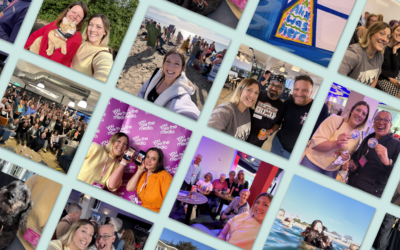
One of the most common things I hear from marketing managers is that the behind-the-scenes gold is right there within reach, but nobody’s capturing it in a way that’s actually usable.
The frustratingly ironic thing about it is that raw, real, on-the-ground content is the stuff that performs well. According to a Sprout Social survey, 87% of people feel more connected to brands when employees share content about them. Research cited by Tribal Impact found that employee-generated content drives 50% more engagement than traditional branded content. And PostBeyond found that content shared by employees gets 8x more engagement than the same content pushed through brand channels, and is reshared up to 24 times more often.
People are tired of your polished, carefully crafted, highly edited promos. They want to see the thing being made, the team actually doing the work.
Your job is simply to make content capture low-friction enough that it actually happens.
Why this is important
Before we get into the how, it’s worth understanding why things have shifted.
A few years ago, a well-produced brand photoshoot coupled with a well-considered content calendar was enough to achieve real success on social media. Now, audiences are considerably more sceptical. They’ve seen too many fancy flat lays, too many stock-photo smiles, too many “Introducing our shiny new service” posts. The polish has become a signal that something is less trustworthy.
Then there’s the increased use of AI, which is making it a little too easy for companies to pretend they know that they’re doing when they haven’t really got a clue. It’s also clogging up our feeds with even more generic corporate nonsense content, so people are craving something real and original. Something riskier and personal.
My personal advice for anyone producing content is to behave less like a PR person and more like a reporter. PR builds a narrative, reporting captures what’s actually happening. Your teams are already at the events, on the sites, and in the rooms where things are happening. They don’t need to invent content. They need to recognise it when they see it and know how to capture and share it.
This kind of content allows you to prove you’re really doing it.
Oktopost’s research found that companies implementing employee-generated content saw a 27% increase in online engagement and a 19% rise in sales within the first year. Those aren’t vanity metrics!
The brands doing this well
IBM is a good corporate example of a large company doing this well. According to Tribal Impact, rather than asking employees to figure out content on their own, they built what they call a Buzz Squad – employees who attend key events and get same-day support from the social media team to help them create and post content quickly. The result is content that feels immediate and human, yet with enough structure to stay on-brand.
Individual employees at Papa Johns started creating their own accounts showing off their dough-spinning skills, particularly on TikTok. The company leaned into it and it became one of their most effective content channels. Nobody wrote a brief for that. It came directly from people who were proud of what they could do and wanted to show it.
These are big brands, but the principle scales down. A team of five can do this just as effectively as a team of five hundred, arguably more so because the content feels even more personal.
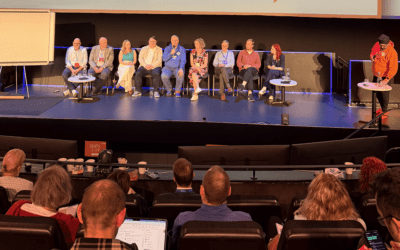
I have created an event guide for employees of a client who were frequently attending conferences and sales events that the client wanted to talk about on their socials. My client rarely received the kind of content they needed, despite them asking and reminded, so I helped make it as easy as possible with a one-page guide, a training session, and a system that’s easy for employees to use on the ground.
Offer guidelines and a system
The people closest to your product or service rarely know what good content looks like for your brand. It’s just not their job, and they don’t think like you. You need to tell them what you’re looking for and show them what good looks like.
Here are a few simple, memorable guidelines:
- If you’re taking a photo or video, try to include a person. A photo of a conference banner is more engaging when the person attending the conference is standing in front of it. A finished landscape garden will get more engagement with the team standing proudly in it, holding their tools.
- If the background is a mess, it’s a no. If the background shows confidential information or phone numbers (however small), that’s also a no. If you wouldn’t want a client to see it, don’t photograph in front of it. I was once sent a photo of an important sustainability meeting in a conference room to post on social media, but the table was covered with disposable plastic water bottles. I flagged that we couldn’t use it for this reason, and that they should reconsider single-use plastics for their events.
- Horizontal for LinkedIn and Facebook. Vertical for Instagram and TikTok. If you’re not sure where it will end up, get a combination of both.
You also need to give people specific prompts rather than open briefs. Sprout Social’s employee training playbook makes the point that employee advocacy works best when people are given clear, manageable actions rather than a general instruction to get more involved in social. The more specific the prompt, the lower the barrier to entry.
Here are the kinds of prompts that tend to work:
- “If something goes well today, photograph it before you clear it away.”
- “If a customer says something lovely, ask if you can quote them.”
- “If you’re halfway through something interesting, film 30 seconds of it.”
- “What’s one thing that happened this week that we’d want people to know about?”
You can also think about different types of content and who on your team is best placed to create each one. The person who talks to customers every day is sitting on a goldmine of real reactions and honest feedback. The person who does the technical work can explain it in a way no marketer would think to. The team member who’s been there since the beginning has real stories that build trust instantly.
Then there’s the system, the ‘how.’ The most common reason team content doesn’t flow is that people don’t know where to send things or who to send them to. A shared folder (Google Drive, OneDrive, whatever you already use) with clear subfolders makes a significant difference. Or some teams have a dedicated team chat for this sort of thing.
The simpler you make participation, the more likely it is to actually happen.
The same applies whether you’re running a formal employee advocacy programme or just trying to get your team of five to send you usable photos from a client event. The system doesn’t need to be fancy, it just needs to be obvious.
Recognise the good stuff when it happens
If someone sends you a great shot and you never mention it again or they don’t see it being used, they’ll assume it wasn’t useful and stop bothering. Close the loop. Tell them when something performed well. Show them the post it became. Share the engagement numbers if they’re good. A bit of recognition goes a long way, and it builds a culture where content capture becomes part of how the team works, not an afterthought that only happens when someone remembers to ask.
A message in the team group chat that says “this photo you sent got 400 impressions in two hours” is enough to make someone feel like their contribution mattered. Because it did!
Need a hand getting started?
If any of this resonates but you’re not sure where to begin, or you’ve tried asking your team for content and it just hasn’t stuck, I can help. I work with businesses to create practical guides, training sessions and simple systems that make it easy for teams to capture and share content consistently without it feeling like another thing on the to-do list.
If that sounds like something you need, drop me an email at bethany@lemonsqueezymarketing.co.uk and tell me what you’re working with.
And if you’re going it alone, I hope this article helped! I’d love to hear from you either way.